What Does a Vascular Doctor Do? A Complete Patient Guide
The human circulatory system is a massive, intricate network of highways. Every day, blood vessels pump thousands of gallons of blood, delivering oxygen and vital nutrients to every organ and tissue while carrying away waste. When this network functions smoothly, the body thrives. However, when blockages, structural weaknesses, or valve failures disrupt this flow, the consequences can range from localized discomfort to life-threatening medical emergencies.
When circulatory issues arise, patients frequently ask: what does a vascular doctor do, and how do they keep this system functioning properly?
A vascular doctor is a highly trained medical expert specializing in the management, diagnosis, and treatment of conditions affecting the vascular system excluding the heart and the brain. From chronic leg swelling and varicose veins to life-threatening conditions like aneurysms, these specialists protect the pathways that keep blood moving. This comprehensive guide details the role of a vascular specialist, the conditions they treat, modern diagnostic techniques, and when it is time to seek expert evaluation.
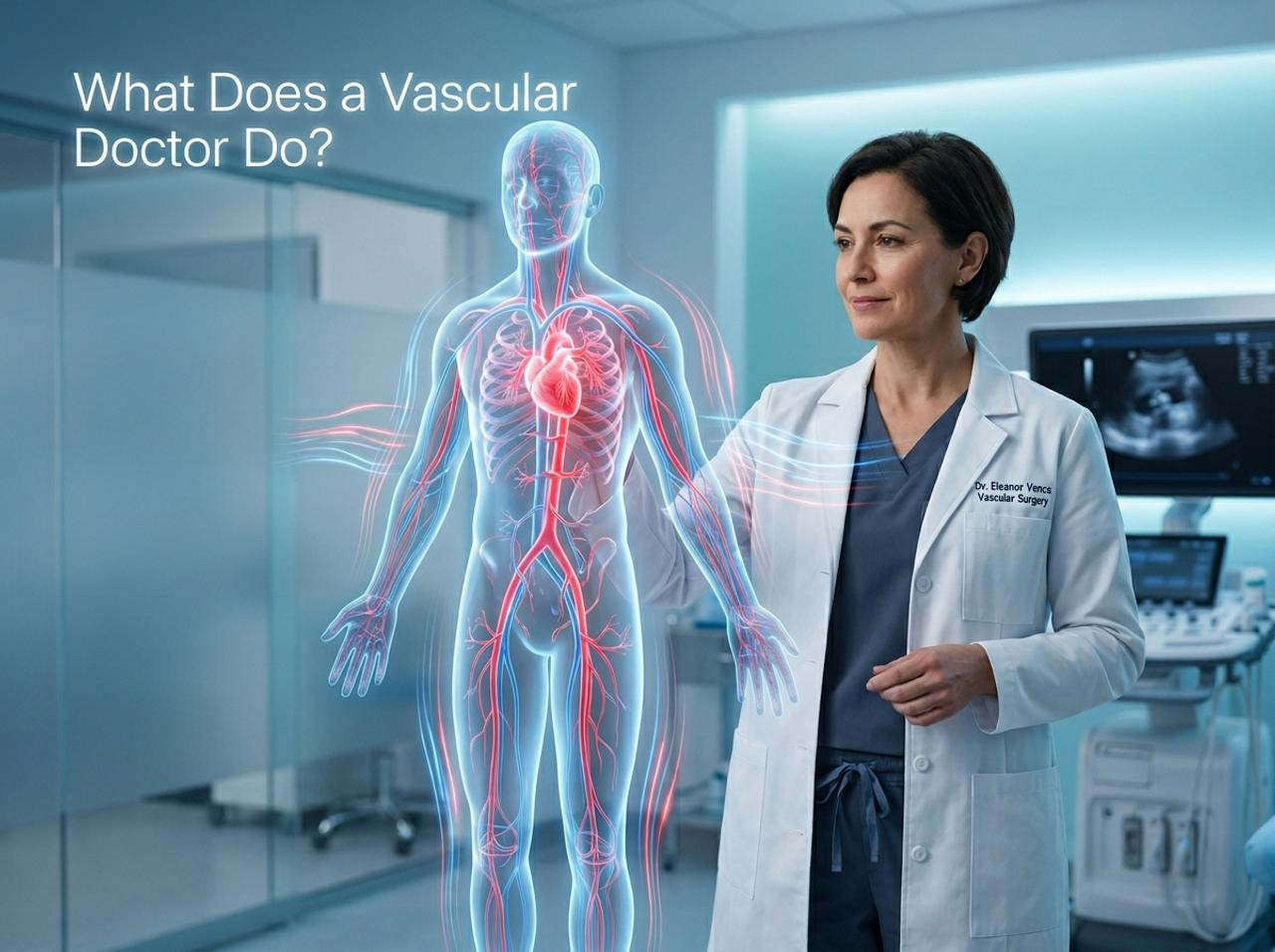
What Is a Vascular Doctor?
To understand the scope of this medical specialty, it is essential to first define what is a vascular doctor. A vascular doctor is a physician who possesses specialized expertise in managing disorders of the circulatory system. This system is composed of arteries, which carry oxygen-rich blood away from the heart, veins, which return oxygen-depleted blood back to the heart, and lymphatics, which balance bodily fluids.
While many people associate blood vessel health exclusively with major surgery, modern vascular specialists are unique. They provide comprehensive, longitudinal care. This means they treat patients using a combination of medical therapy, lifestyle modifications, minimally invasive endovascular procedures, and traditional open surgery when necessary.
Vascular Doctors vs. Other Specialists
Because the cardiovascular system is interconnected, patients often confuse vascular doctors with other medical professionals:
- Vascular Specialists vs. Cardiologists: Cardiologists focus primarily on the heart muscle, its internal chambers, and the coronary arteries directly feeding the heart. A vascular doctor handles the blood vessels throughout the rest of the entire body, such as those in the limbs, neck, and abdomen.
- Vascular Specialists vs. Interventional Radiologists: While both perform minimally invasive image-guided procedures, a vascular doctor provides long-term clinical care, manages the patient's condition before and after treatment, and can perform open surgery if an endovascular approach fails or is inappropriate.
What Does a Vascular Doctor Do?
At its core, the answer to what does a vascular doctor do encompasses a broad spectrum of clinical responsibilities aimed at restoring or maintaining healthy blood flow. These specialists spend their days diagnosing complex circulatory conditions, monitoring slow-progressing diseases, and performing targeted procedures to open blocked vessels or repair damaged ones.
A vascular doctor's daily responsibilities generally include:
- Clinical Evaluations: Reviewing comprehensive medical histories, assessing patient symptoms (such as localized pain or skin changes), and performing specialized physical examinations to check pulses throughout the extremities.
- Diagnostic Interpretation: Reading specialized non-invasive vascular imaging studies to locate exact points of restriction, reflux, or structural weakening within blood vessels.
- Long-Term Medical Management: Prescribing medications such as antiplatelets, anticoagulants, and cholesterol-lowering drugs to manage chronic conditions like atherosclerosis before they escalate.
- Performing Advanced Procedures: Utilizing state-of-the-art endovascular toolkits to perform catheter-based interventions, or performing open surgical reconstructions when complex structural repairs are required.
Common Conditions Treated by Vascular Doctors
Vascular specialists manage a wide range of diseases, which are generally categorized by the specific type of blood vessel involved.
1. Arterial Diseases
Arteries have thick, muscular walls designed to handle high-pressure blood flow. When they become narrowed or weakened, severe complications can occur:
- Peripheral Artery Disease (PAD): A condition where fatty deposits (plaque) accumulate inside the arteries supplying the limbs, most commonly the legs. This restricts blood flow, causing pain and increasing the risk of tissue loss.
- Abdominal Aortic Aneurysm (AAA): A dangerous bulging or weakening in the wall of the aorta, the primary artery supplying blood to the body. If left untreated, an aneurysm can rupture, causing catastrophic internal bleeding.
- Carotid Artery Disease: Narrowing of the main arteries in the neck that deliver blood to the brain. This restriction, often caused by plaque buildup, is a leading cause of ischemic strokes.
2. Venous Diseases
Veins are equipped with one-way valves designed to push blood upward against gravity, back toward the heart. When these valves weaken, blood pools in the lower extremities, leading to chronic venous disorders:
- Chronic Venous Insufficiency (CVI): A long-term condition where vein valves fail to function effectively, causing blood to pool in the legs. This leads to persistent swelling, skin discoloration, and aching.
- Varicose Veins and Spider Veins: Enlarged, twisted, and visible veins near the skin's surface. While spider veins are often cosmetic, larger varicose veins frequently point to underlying venous insufficiency and cause physical discomfort.
- Deep Vein Thrombosis (DVT): The formation of a dangerous blood clot within a deep vein, typically in the thigh or lower leg. If a piece of the clot breaks free, it can travel to the lungs, causing a life-threatening pulmonary embolism.
3. Additional Circulatory Disorders
Beyond standard arterial and venous conditions, vascular doctors treat complex structural and lymphatic conditions, including Lymphedema (chronic swelling caused by lymphatic fluid backup) and Dialysis Access Creation, which involves surgically constructing an arteriovenous (AV) fistula or graft for patients experiencing kidney failure.
Signs You May Need to See a Vascular Doctor
Circulation problems rarely develop overnight. They typically manifest as subtle physical changes that gradually worsen over time. Recognizing these symptoms early can prevent irreversible tissue damage or systemic complications.
| Symptom | Potential Underlying Condition | Why It Happens |
|---|---|---|
| Claudication (Leg cramping during walking that resolves with rest) | Peripheral Artery Disease (PAD) | Muscles are deprived of oxygen-rich blood during exertion. |
| Non-Healing Leg or Foot Ulcers | Severe Arterial or Venous Insufficiency | Lack of proper blood flow prevents cells from repairing tissue damage. |
| Unilateral Leg Swelling & Warmth | Deep Vein Thrombosis (DVT) | A blood clot blocks the venous return, causing rapid fluid backup. |
| Skin Discoloration (Hemosiderin Staining) | Chronic Venous Insufficiency (CVI) | Pooled blood causes red blood cells to break down, staining the skin brown or rust-colored. |
| Coldness or Numbness in One Limb | Acute or Chronic Artery Blockage | Severely restricted arterial flow fails to maintain normal limb temperature. |
How Vascular Doctors Diagnose Circulation Problems
Modern vascular medicine relies heavily on advanced, non-invasive diagnostic technologies to visualize blood vessels in real time without resorting to exploratory surgery.
Duplex Ultrasound Vascular Imaging
The foundational diagnostic tool in any vascular practice is the duplex ultrasound. This non-invasive test combines traditional ultrasound imaging, which displays the physical structure of the blood vessels, with Doppler ultrasound, which visualizes the speed and direction of blood flow. It allows specialists to identify exact points of valve failure in veins or localized blockages within arteries.
Ankle-Brachial Index (ABI) Testing
The Ankle-Brachial Index is a quick, non-invasive test used to screen for peripheral artery disease. A clinician measures the blood pressure in a patient's ankles and compares it directly to the blood pressure in their arms. A ratio below 0.90 indicates a restriction of blood flow in the lower limbs, signaling the presence of arterial disease.
Advanced Cross-Sectional Imaging
When detailed structural roadmaps are required prior to an intervention, vascular doctors utilize advanced cross-sectional imaging:
- Computed Tomography Angiography (CTA): Uses advanced X-rays and contrast dye to generate detailed, three-dimensional models of the arteries and veins.
- Magnetic Resonance Angiography (MRA): Utilizes powerful magnetic fields and radio waves to evaluate blood vessels, providing an effective alternative for patients who cannot tolerate the contrast dyes used in CT scans.
Modern Treatments Used in Vascular Medicine
The field of vascular medicine has evolved substantially over the past few decades. Today, a vascular doctor emphasizes a tiered treatment approach, prioritizing conservative medical management and minimally invasive treatments before considering traditional open surgery.
Lifestyle Transformations and Medical Therapies
For early-stage circulatory issues, lifestyle modifications can halt or reverse disease progression. Vascular doctors work closely with patients to implement structured walking programs, optimize smoking cessation strategies, and establish heart-healthy dietary habits.
When lifestyle changes are insufficient, targeted medical therapies are introduced. These include antiplatelet therapies to keep blood flowing smoothly, statins to stabilize arterial plaques, and specialized compression therapy to mechanically support venous circulation and reduce lower limb edema.
Minimally Invasive Procedures Explained
When conservative measures are insufficient to manage advanced vascular conditions, specialists turn to minimally invasive endovascular procedures. These modern interventions are typically performed on an outpatient basis under local anesthesia, requiring only a tiny puncture wound to access the circulatory system.
1. Angioplasty and Stent Placement
To treat arterial blockages caused by peripheral artery disease, a vascular doctor inserts a thin, flexible tube called a catheter into an artery, usually through the groin. Guided by real-time X-ray imaging, the doctor navigates the catheter to the site of the blockage. A small balloon at the tip of the catheter is inflated, compressing the plaque against the arterial wall to restore normal blood flow. To keep the artery from collapsing or narrowing again, the doctor may deploy a small, mesh tube known as a stent to act as a permanent internal scaffold.
2. Atherectomy
In cases where arterial plaque has calcified and hardened, an atherectomy may be performed. Instead of simply compressing the plaque with a balloon, the specialist uses a catheter equipped with a microscopic, rotating cutting blade or laser tip to safely shave away and remove the hardened material from the vessel walls.
3. Endovenous Ablation (Laser or Radiofrequency)
For chronic venous insufficiency and severe varicose veins, vascular doctors utilize endovenous ablation to close down malfunctioning veins. A thin catheter is inserted into the damaged vein, delivering targeted thermal energy (via laser or radiofrequency waves) to seal the vessel closed. The body then naturally redirects blood flow through nearby, healthy veins, and the closed tissue is eventually reabsorbed.
4. Sclerotherapy
Mainly utilized for smaller varicose veins and spider veins, sclerotherapy involves injecting a specialized chemical solution directly into the problematic vein. The solution irritates the vessel lining, causing it to collapse and stick together. Over the course of a few weeks, the treated vein fades from view, resolving both cosmetic concerns and localized physical discomfort.
What Happens During a Vascular Consultation?
If you are referred to a vascular specialist, your initial visit will focus primarily on evaluation and diagnosis, rather than an immediate procedure. The consultation is an opportunity to map out your overall circulatory health.
During a routine consultation, patients can expect:
- Detailed Symptom Mapping: The physician will ask detailed questions about when your leg pain occurs, whether skin changes are present, and how far you can walk before needing rest.
- Physical and Pulse Assessment: The doctor will check your pulses at various anatomical checkpoints, including your neck, wrists, groin, and feet, while inspecting your limbs for structural alignment, swelling, or temperature differences.
- In-Office Vascular Diagnostics: Highly experienced specialists, such as Dr. Amir Salem, MD, frequently integrate real-time vascular ultrasound evaluations directly into the consultation process to evaluate blood velocity and structural integrity on the spot.
- Collaborative Care Planning: Once the diagnostic data is gathered, the doctor will sit down with you to construct a highly personalized care plan, explaining whether your condition is best managed through simple lifestyle changes, medication, or targeted procedures.
Preventive Care and Long-Term Vascular Health
While vascular doctors possess advanced tools to treat disease, preventing circulatory issues before they require intervention is always the ideal outcome. Maintaining long-term vascular health involves managing systemic risk factors that contribute to vessel damage.
- Engage in Consistent Physical Activity: Walking, cycling, and swimming stimulate the calf muscle pump, which actively assists the veins in returning blood back to the heart. Exercise also encourages the formation of collateral circulation natural bypass pathways that form around minor arterial blockages.
- Prioritize Smoking Cessation: Nicotine is a potent vasoconstrictor that accelerates the accumulation of arterial plaque and damages the delicate inner lining of blood vessels. Quitting smoking is the single most impactful choice a patient can make for their vascular health.
- Manage Chronic Systemic Conditions: High blood pressure, elevated cholesterol levels, and unmanaged diabetes damage blood vessels over time, making them rigid and prone to injury. Keeping these metrics within target ranges protects the entire circulatory network.
Importance of Early Diagnosis and Treatment
The most critical factor in managing vascular disease is early intervention. Because blood vessels deteriorate gradually, early symptoms are frequently dismissed as normal signs of aging or temporary fatigue. However, delaying care can allow manageable conditions to progress into severe health crises.
For example, catching peripheral artery disease early allows for conservative management via walking programs and medication, whereas ignoring symptoms can lead to severe tissue loss or amputation. Similarly, identifying a silent abdominal aortic aneurysm through routine screening allows for a planned, minimally invasive repair, eliminating the high risks associated with emergency open surgery following a sudden rupture. Prioritizing your circulatory health today safeguards your mobility and independence for the future.
Conclusion
Understanding what does a vascular doctor do highlights just how vital these medical professionals are to our long-term health and vitality. As dedicated specialists of the circulatory network, they protect the intricate pathways that deliver oxygen and nutrients to every corner of the body. Whether they are managing peripheral artery disease, eliminating the discomfort of chronic venous insufficiency, or utilizing minimally invasive tools to open blocked pathways, their primary focus is always on restoring healthy circulation and improving quality of life.
If you or a loved one are experiencing persistent leg swelling, unexplained limb pain during activity, or non-healing wounds, do not wait for symptoms to worsen. Scheduling an
Frequently Asked Questions (FAQs)
1. What is the difference between a vascular doctor and a vein specialist?
A vascular doctor (or vascular surgeon) is an expertly trained physician qualified to treat the entire circulatory network, including both complex arterial blockages and venous diseases. A "vein specialist" is a broader term that can include doctors from various medical backgrounds who focus exclusively on superficial venous issues, such as varicose veins and cosmetic spider veins.
2. Can a vascular doctor treat poor circulation without performing major surgery?
Yes. The vast majority of conditions managed by vascular doctors are treated without major open surgery. Modern treatment strategies emphasize conservative medical therapies, customized walking regimens, targeted compression garments, and minimally invasive endovascular procedures like angioplasty or vein ablation, which require only a tiny needle puncture.
3. What causes a person to be referred to a vascular specialist?
Primary care physicians typically refer patients to a vascular doctor if they display symptoms of advanced circulatory issues. Common triggers include severe leg cramping while walking (claudication), non-healing foot or leg ulcers, persistent swelling or skin discoloration in the lower limbs, or an abnormal reading on an Ankle-Brachial Index (ABI) screening test.
4. Are minimally invasive vascular treatments painful?
Minimally invasive endovascular procedures involve minimal discomfort. These treatments are typically performed under local anesthesia to numb the insertion site, occasionally paired with mild sedation to help patients remain relaxed. Most patients report feeling only a mild pressure sensation during the procedure and experience a rapid recovery with minimal post-treatment pain.
5. How does diabetes affect a patient's vascular health?
Chronic high blood sugar levels can damage the delicate endothelial lining of the blood vessels over time. This accelerates the accumulation of arterial plaque, significantly increasing a patient's risk of developing peripheral artery disease (PAD). Diabetes also compromises microvascular circulation, making it much more difficult for the body to heal minor foot blisters or minor skin wounds.